
From Suspicious Mole to Peace of Mind: What Happens After a Dermatologist Finds a Spot
Published November 6, 2026
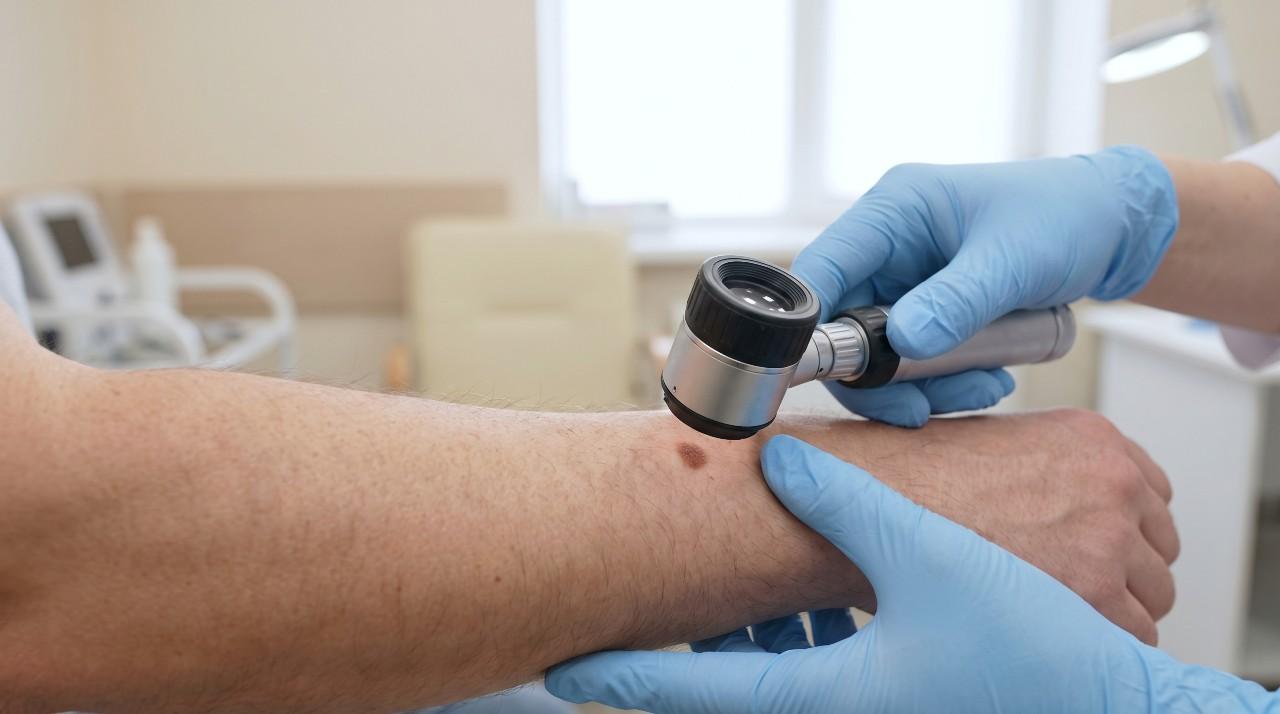
A suspicious mole appointment can bring questions, especially when your dermatologist recommends taking a closer look. Does it mean skin cancer? Will you need a biopsy?
The good news is that suspicious does not automatically mean cancerous. A spot may simply need monitoring, follow-up, or a biopsy to determine what it is. Finding a suspicious spot is the beginning of getting answers, not a diagnosis by itself.
What Makes a Mole Look Suspicious?
When a dermatologist finds a suspicious mole, they look at several characteristics rather than relying on one feature alone. A spot may deserve a closer look if it has:
Asymmetry
Irregular borders
Uneven or multiple colors
Changes in size, shape, or texture
Evolution over time
Bleeding, crusting, itching, or tenderness
A noticeably different appearance from your other moles
Understanding the ABCDEs of Melanoma
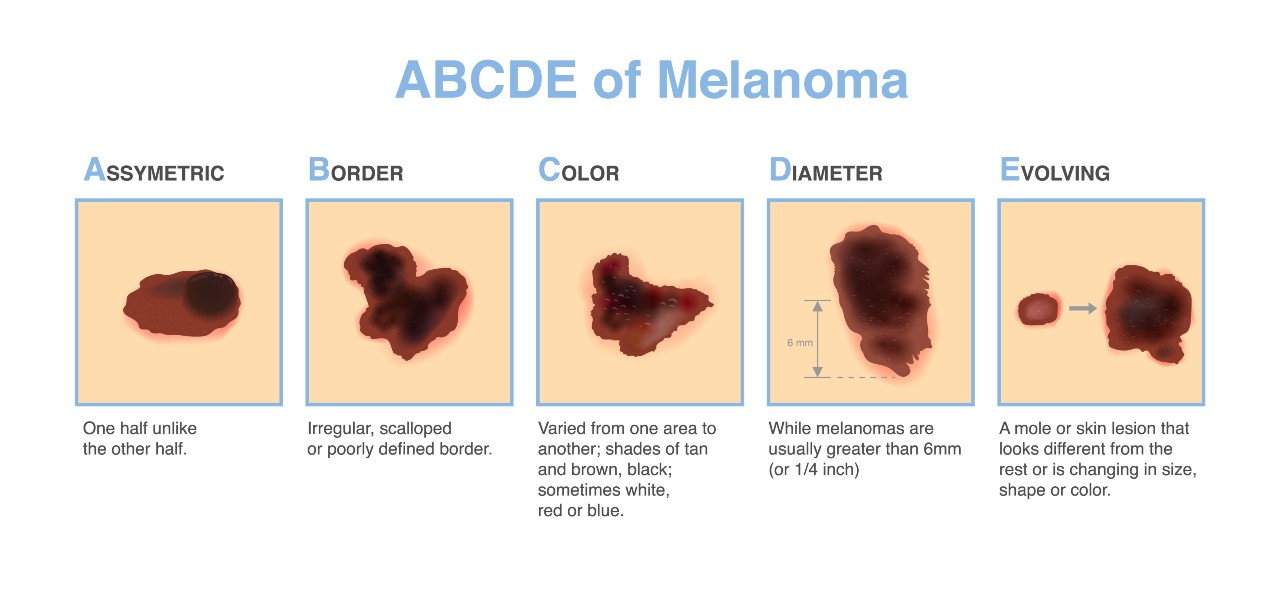
Dermatologists may also use the ABCDEs of melanoma as a helpful framework:
A – Asymmetry: One half looks different from the other
B – Border: The edges are irregular, uneven, or poorly defined
C – Color: The spot has multiple or uneven colors
D – Diameter: Melanomas are often larger than 6 millimeters when diagnosed, but they can be smaller
E – Evolving: The mole is changing in appearance over time
Providers also consider the overall pattern of your skin. Sometimes called the “ugly duckling” sign, a mole may stand out because it looks different from your other moles. These features help dermatology providers decide which spots deserve a closer look. They are warning signs to evaluate, not a diagnosis on their own.
What Happens During a Suspicious Mole Appointment?
A suspicious mole appointment typically starts with a conversation about the spot and a closer examination of your skin. Your provider will use what they learn from your medical history and what they see during the exam to determine whether the mole should be monitored, tested, or biopsied.
Your Provider Will Ask About the Spot
Your dermatologist may ask when you first noticed the mole and whether it has changed over time. Be prepared to discuss:
Changes in size, shape, or color
Bleeding, crusting, itching, or tenderness
Any previous photos of the spot
Personal or family history of skin cancer
Previous atypical moles or skin biopsies
If possible, bring photos showing how the spot looked previously and make a note of any other areas you'd like your provider to examine.
The Spot Will Be Examined Closely
Your provider will visually examine the mole and may compare it with surrounding spots or other moles on your skin. They may also use dermoscopy, which involves a handheld magnifying device that provides a closer look at structures beneath the skin's surface.
If appropriate, your provider may examine additional areas during a broader skin cancer screening or total body skin exam. Depending on what they find, the next step may be continued monitoring, follow-up testing, or a skin biopsy.
Does Every Suspicious Mole Need a Biopsy?
No. Not every mole or spot that receives a closer look needs to be biopsied. After examining a suspicious spot, your dermatologist may recommend:
Routine monitoring with no additional treatment
Watching the spot for changes
Photographing or documenting the spot for future comparison
Scheduling a follow-up evaluation
Performing a biopsy
A biopsy may be recommended when a provider sees features that need to be examined under a microscope to determine exactly what the spot is.
What Is a Skin Biopsy and Why Might You Need One?
A skin biopsy is a diagnostic procedure used to determine what a suspicious spot is. Your provider removes all or part of the area and sends the tissue to a laboratory, where a pathologist or dermatopathologist examines the sample under a microscope. This helps determine what types of cells are present and whether further treatment may be needed.
A biopsy recommendation does not mean you have been diagnosed with skin cancer. A biopsy gives your provider a clear answer about a spot that cannot be fully identified by appearance alone.
What Happens During a Mole Biopsy?
A mole biopsy is generally a straightforward procedure performed in a dermatology office. The exact approach depends on the spot being evaluated, including its location, size, shape, and depth. In general, you can expect:
The area is cleaned and numbed: Your provider cleans the skin and uses a local anesthetic to numb the area. You may briefly feel the anesthetic injection, but the biopsy itself should be much more comfortable once the area is numb.
A small amount of tissue is removed: Depending on the spot and what your provider needs to evaluate, they may remove part of the lesion, shave a portion from the surface, or remove the entire mole.
The sample is sent for examination: The tissue is sent to a laboratory, where it can be examined under a microscope to determine what the spot is.
The area is cared for: Your provider will explain how to care for the biopsy site while it heals and whether you need a follow-up appointment.
You receive your results: Pinnacle Dermatology will communicate your results and any recommended next steps.
What Should I Expect After the Biopsy?
After a biopsy, your provider will care for the area and give you instructions for keeping it protected while it heals. Depending on your procedure, you may leave with:
A small bandage or dressing
Written wound-care instructions
Guidance on when to change the dressing
Instructions for washing and protecting the area
Information about when and how your results will be shared
It’s normal to experience some mild tenderness, slight swelling, minor bleeding at first, or a small scab as the area heals. Healing time can vary depending on the biopsy technique, size and location of the biopsy, and your individual healing response. Always follow Pinnacle Dermatology’s individualized biopsy aftercare instructions for your specific procedure.
How Long Do Mole Biopsy Results Take?
Mole biopsy results are not always immediate. The tissue must first be processed and examined under a microscope, and the timeline can vary depending on the laboratory, type of sample, and whether additional analysis is needed.
Pinnacle Dermatology will provide information about when to expect your results and how they will be shared. Before leaving your appointment, ask when you should expect results and how Pinnacle Dermatology will contact you.
What Happens While You Wait for Your Biopsy Results?

Waiting for mole biopsy results can be an uncertain part of the process, but there are a few simple things you can do while you wait:
Follow your provider’s wound-care instructions and keep the biopsy site protected as directed.
Monitor the area as it heals, but avoid repeatedly examining it for clues about your diagnosis.
Keep your contact information current so Pinnacle Dermatology can reach you with your results.
Write down any questions you want to ask when your results are shared.
Continue practicing normal skin awareness and monitoring other areas of your skin.
Keep in mind that how the biopsy site looks while it heals does not tell you what your results will be. Waiting for results is a normal part of the process, and your results will help your provider determine what to do next.
What Can Mole Biopsy Results Show?
Mole biopsy results can point to a few different outcomes. Your provider will explain exactly what your results mean and whether you need any additional care.
Result 1: The Spot Is Benign
Many biopsied spots turn out to be benign, meaning the tissue does not show cancer. In some cases, no additional treatment is needed for that spot. Your provider may still recommend regular skin checks based on your personal history and overall skin cancer risk.
A benign result can provide the reassurance many patients hope for after a suspicious mole appointment.
Result 2: The Mole Is Atypical
Your results may describe a mole as atypical or dysplastic. This means the mole has some unusual features, but it is not the same as melanoma. Most dysplastic moles do not become melanoma, although having multiple atypical moles can be linked to a higher risk of developing melanoma.
What happens next depends on your specific results and overall history. Your provider may recommend:
Monitoring the mole or surrounding area
A follow-up skin exam
Removing more of the mole in certain situations
Result 3: Skin Cancer Is Found
Sometimes a biopsy does identify skin cancer. Possible diagnoses include basal cell carcinoma, squamous cell carcinoma, or melanoma, among others.
If this happens, your provider will explain what the diagnosis means and discuss your treatment options. Depending on the type and details of the skin cancer, this may involve additional removal, treatment, and follow-up care. Many skin cancers have highly effective treatment options, especially when found early.
If Skin Cancer Is Found, Will I Need Another Procedure?
Sometimes, yes. A biopsy may identify skin cancer without completely removing it, so your provider may recommend another procedure based on the type, size, depth, and location of the cancer.
Possible next steps may include:
Surgical excision: Removing the cancer along with a small amount of surrounding skin.
Mohs surgery: A precise technique that removes cancer layer by layer while preserving as much healthy skin as possible.
Other treatments: Your dermatologist may recommend another treatment based on your specific diagnosis.
Additional specialists: In some cases, your dermatologist may work with or refer you to another specialist for further care.
Your provider at Pinnacle Dermatology will explain your diagnosis, treatment options, and what to expect before recommending the next step.
How Should I Check My Skin Between Dermatology Appointments?
Regular self-skin exams can help you notice new or changing spots between dermatology appointments. Look for moles or spots that are:
New or changing in size, shape, or color
Different from your other moles
Bleeding, itching, or persistently crusting
Not healing
Use the ABCDEs of melanoma as a quick reminder and check hard-to-see areas with a mirror or partner. Photos can also help track changes over time. If a spot concerns you, schedule an appointment with your dermatologist.
How Can I Protect My Skin After a Suspicious Mole Evaluation?
A suspicious mole evaluation is an opportunity to make healthy skin a regular priority. Simple habits can help protect your skin and make it easier to notice meaningful changes.
Protect Your Skin From UV Exposure
Help protect your skin from UV exposure by:
Using broad-spectrum sunscreen and reapplying during outdoor activities
Wearing protective clothing and wide-brimmed hats
Seeking shade when possible
Avoiding indoor tanning
Make Skin Awareness Part of Your Routine
Get familiar with your normal mole pattern and watch for meaningful changes. If you notice a new or changing spot, bring it to the attention of Pinnacle Dermatology.
Keep Recommended Follow-Up Appointments
Regular follow-up appointments support early detection and help your provider create a personalized skin care plan. If you've had an atypical mole or skin cancer, you may need more frequent monitoring based on your individual needs.
When Should I Schedule a Suspicious Mole Appointment?
Consider scheduling an appointment with Pinnacle Dermatology if you notice a new or unusual mole, changes in its size, shape, color, or texture, or a spot that bleeds, crusts, itches, feels tender, or does not heal. You should also have a spot checked if it looks different from your other moles or simply concerns you.
You don’t have to determine on your own whether a spot is concerning. Schedule an appointment with Pinnacle Dermatology to have it evaluated and find out whether monitoring, testing, or another next step is right for you.