
Skin Cancer Screenings and Total Body Skin Exams
Early detection saves lives. Pinnacle Dermatology offers comprehensive skin cancer screenings and total body skin exams to protect your health.
Treatment availability varies by Pinnacle Dermatology location. Please contact your clinic to confirm.

Early detection saves lives. Pinnacle Dermatology offers comprehensive skin cancer screenings and total body skin exams to protect your health.
Treatment availability varies by Pinnacle Dermatology location. Please contact your clinic to confirm.
What Is a Full Body Skin Exam?
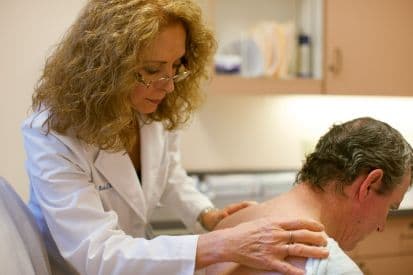
A full body skin exam is performed by a trained dermatologist, involving a thorough check of your entire skin surface, looking for any irregularities that could signal the formation of various types of skin cancers.
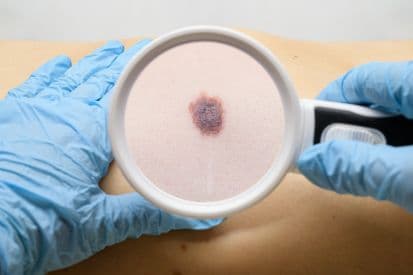
A full body skin exam procedure—or total body skin exam (TBSE)—plays a vital role in skin cancer management. This comprehensive visual examination includes evaluating any moles, lesions, or discoloration of the skin.
Who Should Get a Full Body Skin Exam and When?
Skin cancer can develop at any age, but the risk increases for adults every year they get older. It is highly recommended that patients get annual skin exams starting at age 35. However, those with certain risk factors may need to start skin cancer screenings earlier in life, and possibly more than once per year.
Skin Cancer Risk Factors
Awareness of risk factors is crucial for informed skin cancer prevention. It has been noted that individuals with the following traits are more susceptible to developing forms of skin cancer:
Family or personal history of skin cancer.
Skin is easily affected by sun exposure including burns, freckles, redness, and discomfort.
Lifestyles or occupations that involve sustained exposure to the sun.
Presence of many existing or new moles.
Having blue/green eyes, or red/blonde hair.
Advanced in age, or geriatric.



How Often Should You Get a Full Body Skin Exam?
It is recommended that you get screened for skin cancer at least once per year by a dermatologist. How often you should get a full-body skin exam might also depend on your specific risk factors, meaning more than one skin check per year.
If you have not been screened for skin cancer in over a year, it might be time to put a dermatology appointment on your calendar. Save time by contacting your local Pinnacle Dermatology office.
Book a Full Body Skin Exam with Pinnacle Dermatology Today
Like an annual physical exam, a regular full body skin exam is essential for early intervention for serious diseases like cancer. Because skin cancer is the most common type of cancer in humans, Pinnacle Dermatology urges you to get an annual TBSE, especially when you have significant risk factors such as a personal history of skin cancer.
If it has been over a year since your last skin cancer screening, or if you have never had a full body skin exam before, consider scheduling your TBSE today with Pinnacle Dermatology!
What to Expect During Your Total Body Skin Exams
If you are feeling apprehensive about a TBSE for a loved one or yourself, you are not alone. The combination of being disrobed for a full-body inspection and physical contact can make some patients feel more vulnerable than they would during other types of medical exams.
Taking the time to read up on all that is involved in your first full body skin exam and what to expect is a smart step toward managing the experience.
What a Dermatologist Is Looking For During a Full Body Exam
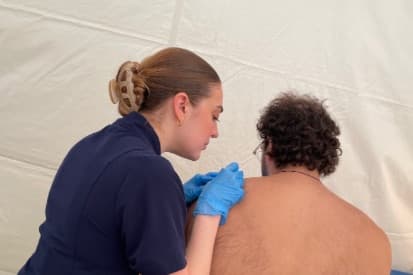
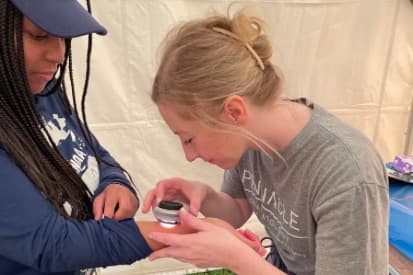
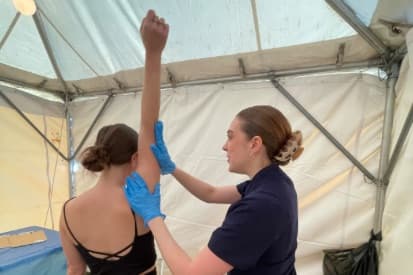
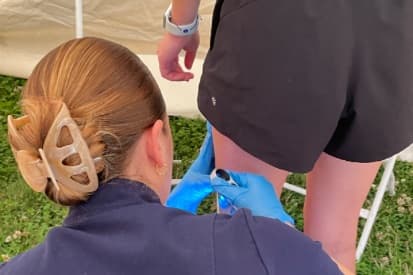
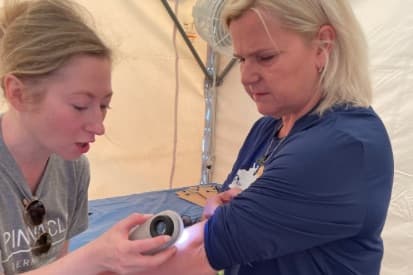
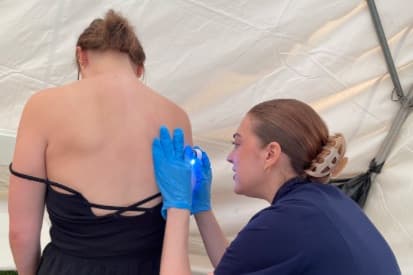
The goal of a TBSE is to check the entire skin - the body's largest organ - for any signs of skin cancer. This coverage includes the scalp, face, neck, ears, arms, legs, feet, toes, and torso. Special attention will be given to any skin lesions, moles, freckles, and birthmarks.
The dermatologist skin check will document the size, shape, color, and borders of each skin mark. Because detecting changes over time is key to identifying potential skin cancer, annual TBSEs allow for a detailed record to compare from year to year.
If anything appears suspicious, your dermatologist may recommend monitoring the area, scheduling follow-up visits, or performing additional testing. Your dermatologist will discuss any findings with you, as well as explain next steps.
Is a Full Body Skin Exam Painful Or Embarrassing?
At Pinnacle Dermatology, we understand that some patients can feel apprehensive or vulnerable, especially if it is their first time to receive a full body skin exam. TBSEs are a gentle visual inspection of the body with no physical pain to be expected from the exam itself. However, if you have issues such as chronic pain or tender spots, please let us know so that we can better accommodate you.
Our providers at Pinnacle Dermatology are professionally trained and knowledgeable. We encourage you to share your personal preferences, such as receiving a total full body skin exam from a female dermatologist. Our care team aims to make your experience as comfortable as possible, so please voice any questions, concerns or feelings of apprehension with our care team.
How to Prepare for a TBSE
With the skin being the body's largest organ, it is important to allow sufficient time for your first and future TBSEs. In addition to timely arrival and expecting to stay the full duration, here are other tips on how to prepare for a full body skin exam, particularly when it is your first time:
Wash your entire body.
Wear clothing that is easy to remove.
Wear shoes that are easy to slip off, and consider wearing shoes without socks.
Consider skipping the application of makeup.
Have your complete medical history ready, asking your blood relatives about any family history of cancer.
Make a list of questions and concerns to discuss with the dermatologist.
Share notes or photos of any concerning skin marks or changes that you have noticed.
What Happens After the Exam?
While the team at Pinnacle Dermatology always hopes to give patients the "all clear," there are occasions when something suspicious is found. If so, you can expect our dermatology provider to clearly communicate next steps which may include self-monitoring, follow-up appointments, testing, and potential future treatments.
That aside, after your TBSE you can expect to resume normal activities and plan to come back for a dermatologist skin check next year.
The Importance of Skin Cancer Prevention
When it comes to skin cancer prevention, managing your skin's exposure to sunlight is first and foremost. The best way to protect your skin from damaging sun exposure is to:
Make a habit of regular sunscreen use: Choose dermatologist recommended sun protection products such as broad spectrum sunblock of 30 SPF. Apply whenever you're outdoors, even during cloudy or winter days. Those whose professions or lifestyle involve extended daytime exposure should reapply sunscreen every two hours, or after swimming or profuse sweating.
Protective clothing and accessories: Skin coverage with clothing and hats are a big help when it comes to sun protection. Wide brimmed hats, UV-blocking sunglasses, full coverage tops and pants, and even rash guards work well to manage exposure.
Take shelter: Remaining indoors or in the shade - especially between the hours of 10 a.m. and 4 p.m. when the UV rays are strongest - is very effective for skin protection.
Of course, the other core component of skin cancer prevention is to keep up with your skin cancer screening schedule and monitor for changes to the skin as directed by your dermatology provider.
Can You Check Your Skin at Home?
Yes, you can check your skin at home and the team at Pinnacle Dermatology would encourage you to do so, especially if you have known risks. Self-monitoring changes to the skin and doing mole checks play an important role in your skin health between visits to your provider. However, skin self checks are not a substitute for regular skin cancer screenings by a trained dermatologist.
How To Perform A Skin Cancer Self-Check at Home
There are parts of your body that you may not be able to inspect closely, which is why it is necessary to get an annual skin exam from a dermatologist. But with the help of mirrors, you can attempt to inspect parts of your body and check for moles that are normally out of view.
Tips for Skin Examination and Mole Checks at Home:
Use a full-length and hand mirror in an area with bright lighting.
If you wear nail polish, remove it to inspect your fingernails.
Use a notebook to draw a mole map that makes note of where moles and other significant marks are currently located on your body. Taking pictures to document the current appearance of marks and moles on your skin also helps.
If you are comfortable doing so, ask for a friend, relative, or roommate to view out of sight areas such as your back, buttocks, or scalp.
Areas Checklist:
360 view: Do an overview of your whole body in front of a mirror.
Face: Using a hand mirror, look closely at every inch of your face, plus the area behind your ears.
Neck: Using the same hand mirror, look all over your neck. To see the back of your neck, you can try using two mirrors.
Scalp: Part your hair a piece at a time to look for spots on your scalp.
Torso: Inspect the entire midsection area, including under the breasts or pectorals.
Hands and arms: Look for spots on the hands and arms all the way around on all surfaces, including between your fingers and fingernails.
Back and buttocks: As best as you can, inspect your back, buttocks and genital area for any spots.
Legs and feet: Look for spots on the legs and feet all the way around on all surfaces, including between your toes, soles of your feet and toe nails.
What to Document:
Look for new growths, spots, or bumps.
Look for changes to preexisting growths, spots, bumps, moles or lesions.
Open sore, scab, or pimple that bleeds and is still unhealed after several weeks.
Patches on the skin that are rough, scaly, red, and are prone to being crusty or bleeding.
Warts, or wart-like growths.
Skin Cancer Symptoms: What To Watch Out For
Depending on your risk factors, your dermatology provider may recommend regular skin cancer self-checks. Whether you are high-risk, or simply curious about the signs of skin cancer, in this section you will learn more about what might appear as cancer on the skin.
ABCDE's of Moles
There are multiple things to watch for on your skin when it comes to signs of skin cancer. Mole checks ensure careful attention to skin growths that could potentially develop into cancer. To remember all the aspects of skin cancer self-checks, patients can learn the ABCDE's of moles.
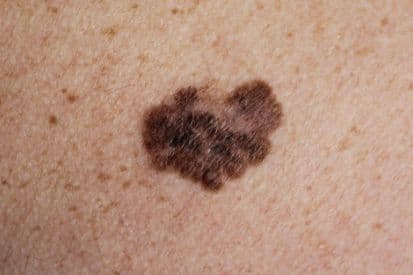
Asymmetry: Incongruent spots on the skin can be a sign of cancer. For example, as a characteristic of melanoma, one half of the mole or spot is often different from the other half. A normal mole should be the same on both sides when divided by an imaginary line.
Border irregularity: A mole's edges can also be a sign of melanoma. Rather than have smooth and defined borders, the cancerous mole may have uneven, jagged, or notched edges.
Coloring: Rather than have a solid, uniform color, moles that have uneven coloring or feature more than one hue could signal melanoma.
Diameter: If a mole seems to have grown in diameter, this can be a sign of melanoma. If a mole extends further than six millimeters in diameter (about the size of a standard pencil eraser), it may need to be evaluated by your dermatologist.
Evolution: Monitoring is all about looking for noticeable changes in the skin, especially moles. Changes in a mole or lesion's size, shape, color or texture should be evaluated by a dermatology provider, especially if you have a personal history of cancer.
When To See a Doctor
It is highly recommended to get a TBSE at least once a year. Skip the time-consuming step of starting a new search for a "full body skin exam near me," and schedule with your local Pinnacle Dermatology office today.
Aside from regular skin checks with your dermatology provider, you should report suspicious changes found during mole checks and a thorough self-examination by calling your dermatology provider.
Are Full Body Skin Exams Covered by Insurance?
Skin cancer screenings are typically covered by insurances that include specialist care. If a full body skin exam is covered by insurance depends on your plan. For example, HMOs require an active referral from a primary care physician. Of course, out-of-pocket expenses may apply including deductibles, copays, and coinsurance.
In addition to contacting your health insurance carrier, please don't hesitate to call your local Pinnacle Dermatology office with any insurance coverage questions.
Why Choose Pinnacle Dermatology for a Full Body Skin Exam?
Pinnacle Dermatology offers a winning combination of skin cancer expertise and advanced diagnostic tools to deliver thorough and accurate skin exam procedures. Because early detection of skin cancer is so important to our dermatology practice, we perform cancer screenings carefully and thoroughly.
Our compassionate and patient-centered team is committed to providing top-tier care during every visit, and full body skin exams are no exception. If you search for "full body exam near me," we invite you to have a look at the Google reviews for your local Pinnacle Dermatology office.
FAQs: Total Body Skin Exam (TBSE)

How Pinnacle Dermatology Can Help
Consulting with one of our dermatologists, or skin care experts, is highly recommended. Our team can develop a suitable treatment plan based on your aesthetic skin care goals. Through an effective skin consultation, we'll start you on a healthy, glowing skin care journey.


